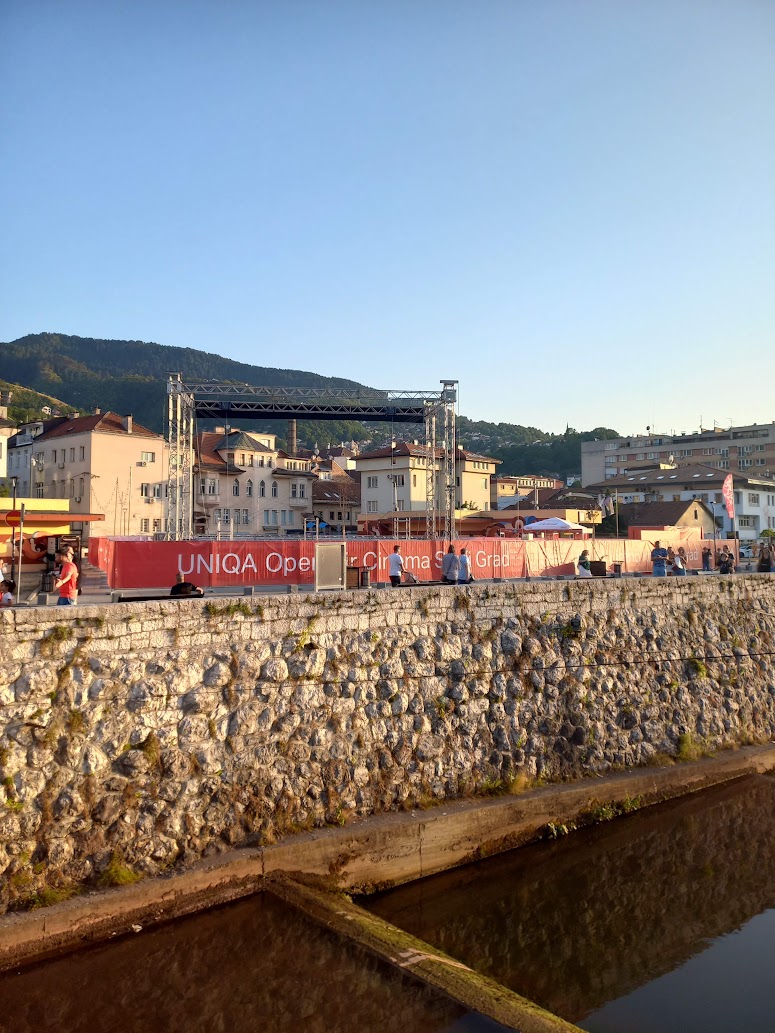
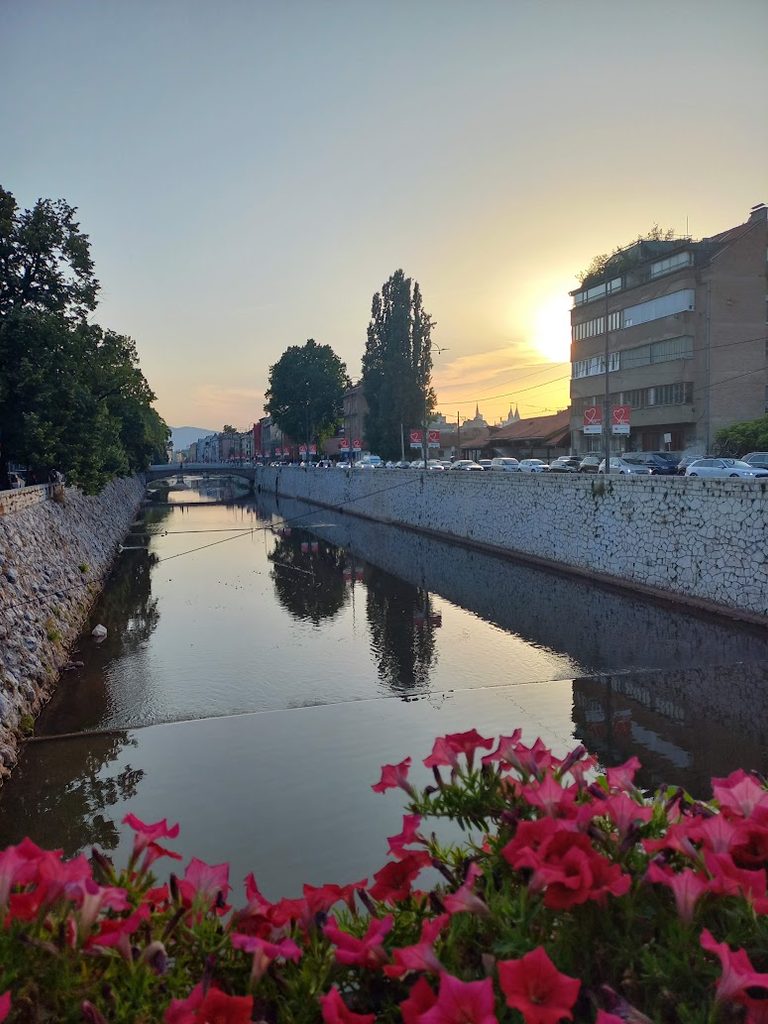
Sarajevo never bothers pretending to be bigger than it is. The valley does the work—mountains close in on both sides, and the whole city folds into that narrow strip of land. That’s why distances lie to you here. A place can look impossibly far on the map, but then you cover it on foot in five minutes flat. Nobody in the center bothers with a car. Streets curve into alleys, alleys drop toward the Miljacka river, and every uphill stretch eventually connects to wherever you were headed anyway.
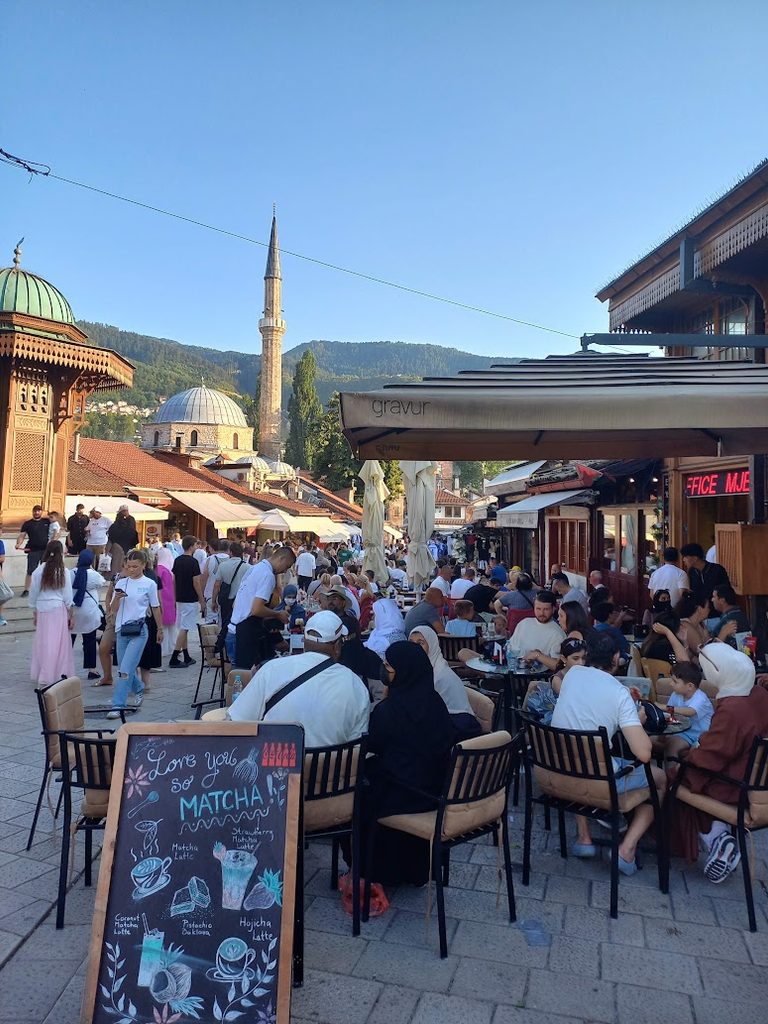
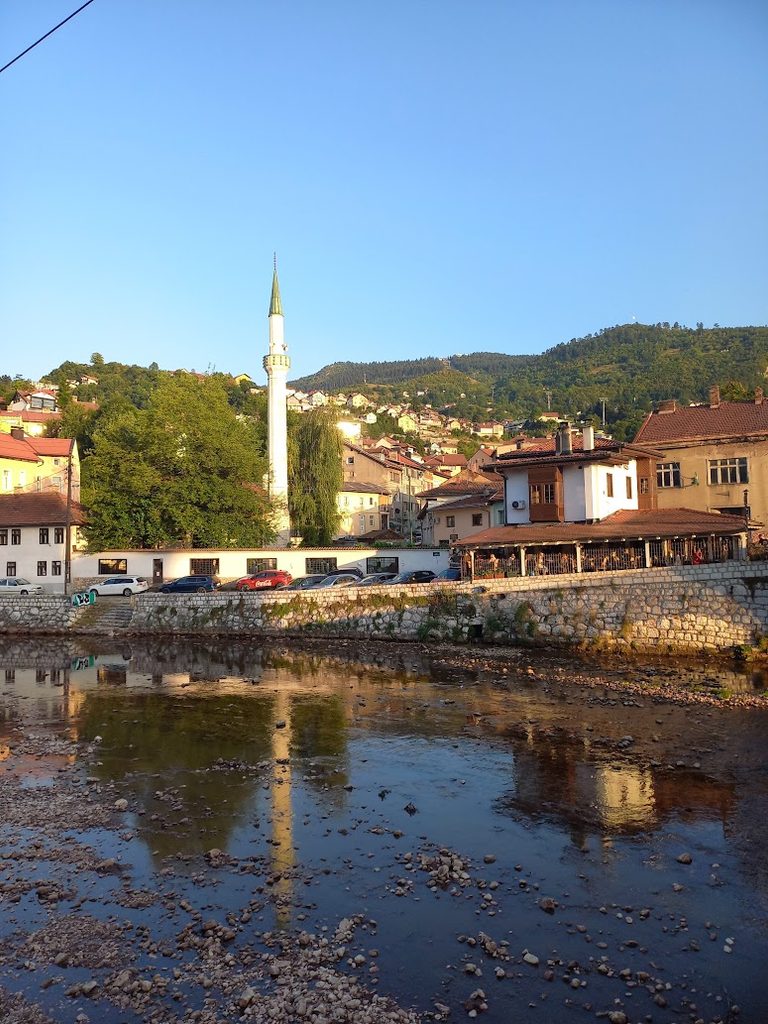
Baščaršija is where the old town starts, and the first thing that changes isn’t the buildings—it’s the pace. Shop doors stand open right onto the street. Coffee cups clink at outdoor tables. You smell grilled meat before you even spot the stall it’s coming from. Somewhere close, the Gazi Husrev-beg Mosque holds its ground between the shopfronts, its minaret rising as naturally as any rooftop around it—nobody here finds that strange, and after a day or two, neither will you. Walk a few blocks, and the scene changes completely. Ordinary residential streets replace Baščaršija’s stalls. Tram tracks cut across the pavement, and one more hill waits after another.
Walking is simply how this city works. Some streets pull you up, some let you coast down, and every so often one just bends and hands you something unplanned—a courtyard, another street, or a coffee shop with three tables and no sign. Sarajevo rewards exactly that kind of wandering. Nobody who’s seen it properly did it from behind a tour bus window. You earn this city on foot, one street at a time.
When the City Becomes a Festival Venue
Sarajevo simply moves outside every summer. Downtown fills first, then the riverfront, then the cafés, then the streets further out—nobody stays in one place for long. The mountains never let you forget this city was never built flat. At the same time, its compactness comes as a pleasant surprise: many places are connected by walking routes, while public transport takes over where walking becomes less convenient.
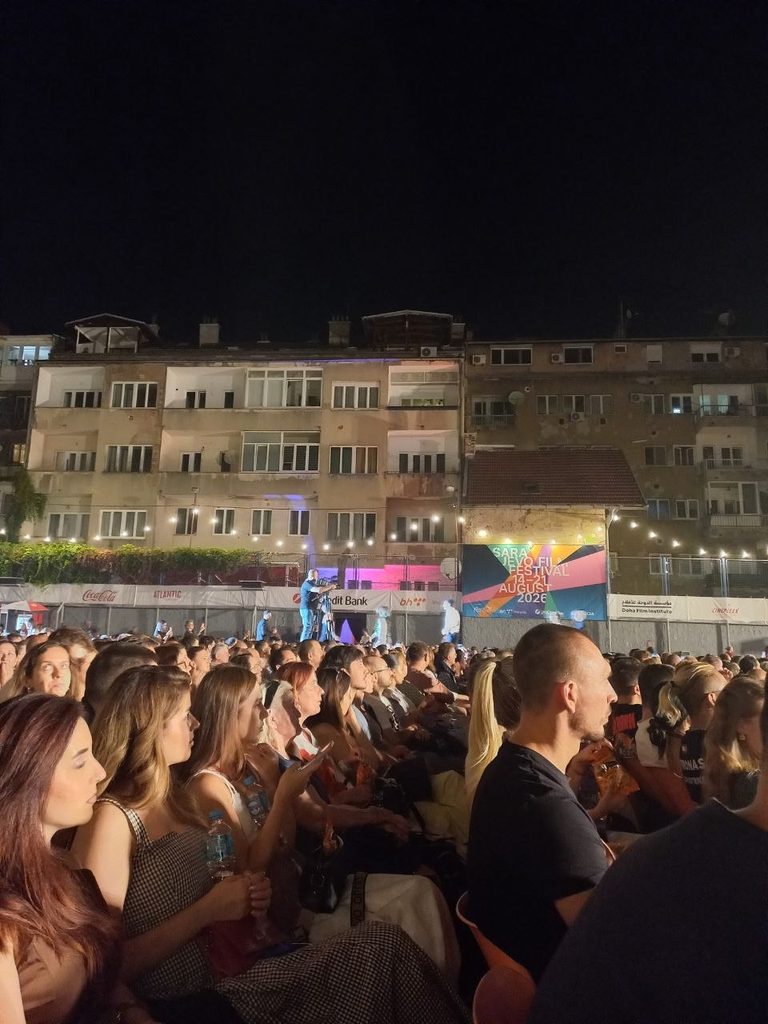
During the festival, this system gains one more feature—free public transport for the whole city. This becomes particularly noticeable in the evening, when an ordinary route through the city may lead not to a shop or a café, but to an open-air cinema. Sarajevo continues to live its own life, but in August its familiar urban movement acquires another route—between films.
Cultural Life Does Not End After Sunset
Sarajevo does not feel like a city that closes its doors and sends everyone home after the working day. In the evening, life moves out onto the streets, into cafés and coffeehouses, along the riverfront, and into small cultural spaces. It is easy to combine a walk with some kind of event, and an ordinary city route may suddenly end at a stage or a cinema screen.
In August, when the Sarajevo Film Festival joins this familiar rhythm, cinema moves beyond traditional theaters and takes over a variety of spaces: alongside conventional cinemas, open-air venues appear where films are watched without being separated from the city around them.
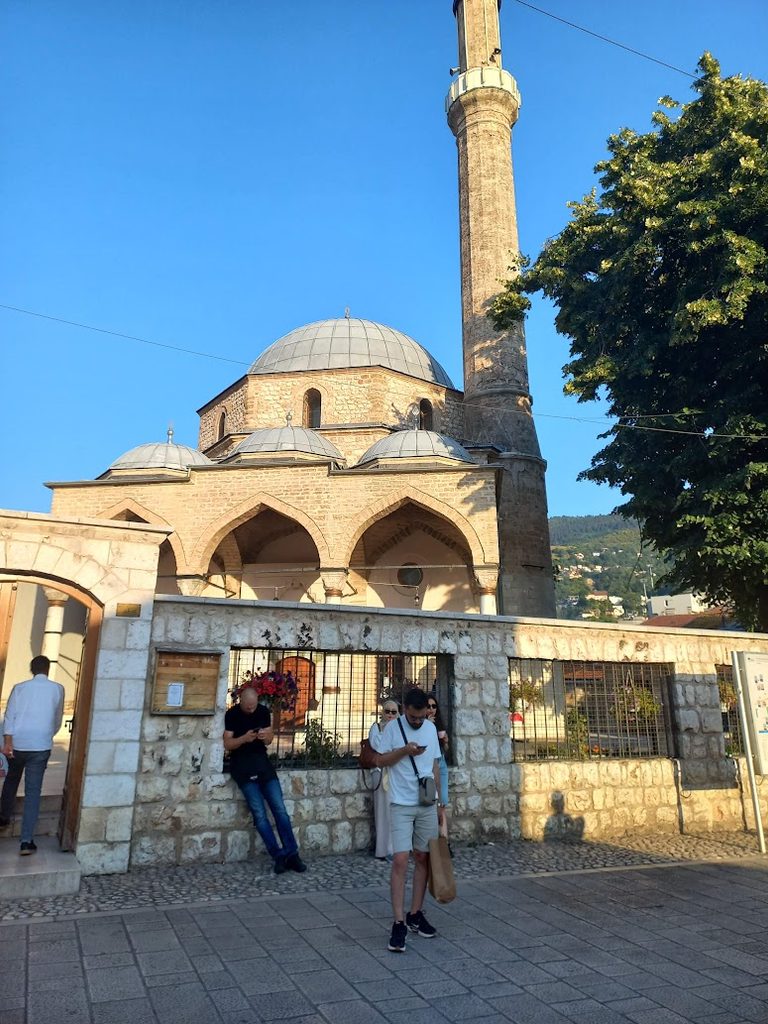
What is particularly interesting is that festival life does not require visitors to give up ordinary Sarajevo. During the day, one can walk through Baščaršija, sit with a coffee in a square, visit a mosque, an Orthodox church, or a synagogue, then walk along the Miljacka before heading to a film screening in the evening. The film festival quietly becomes part of city life.
From a Besieged City to an International Festival
The story starts in 1995, and the war hadn’t even ended yet. Three years into the siege, Obala Art Center—already knee-deep in cultural work around the besieged city—launched a film festival with one clear goal: keep civic life going and keep Sarajevo’s cosmopolitan spirit intact.
The festival itself came second, though—the real story starts two years earlier, in a basement. In 1993, Obala turned part of the Academy of Performing Arts basement into Apollo, a makeshift cinema built for wartime, powered by a generator and fed by VHS tapes that arrived in the city however they could get in. Shells could fall any night, and the screenings kept running anyway. One cigarette bought you a ticket. A story like that keeps outgrowing any single article, the kind of material a full book project could actually do justice to.
The international film world didn’t abandon the city either. Programs and retrospectives kept coming through, including selections pulled straight from Edinburgh and Locarno. Cinema kept Sarajevo tied to the outside world from February 1993 clear through December 1995. That practice grew into the Sarajevo Film Festival the same year the war ended. Thirty years later, it still stands as one of the region’s key stages for film—an international festival known now for its focus on Southeast European cinema.
A Festival That Takes Over the Whole City
Don’t go looking for one central cinema at SFF—there isn’t one. In 2026 the program spreads across more than twenty venues in five municipalities of Sarajevo Canton. The program name often matters more than the address—Open Air, Kinoscope, Summer Screen, and the competition sections each offer a different way of watching a film.
The festival stretches well past screenings, too. CineLink Industry Days pulls in producers and industry professionals, while Talents Sarajevo works with young filmmakers—fifty of them this year, from fourteen countries. Masterclasses run alongside panels and special programs throughout the week.
Even the artistic sections split by character. Kinoscope hunts down auteur cinema with an unusual voice, films that struggle to find room in ordinary distribution. Kinoscope Surreal pushes further into horror and body horror, genre territory most festivals skip. Summer Screen brings in new work from directors people already know. A program like this varied still needs one consistent hand at the editing stage to keep the catalogue copy readable across all those sections.
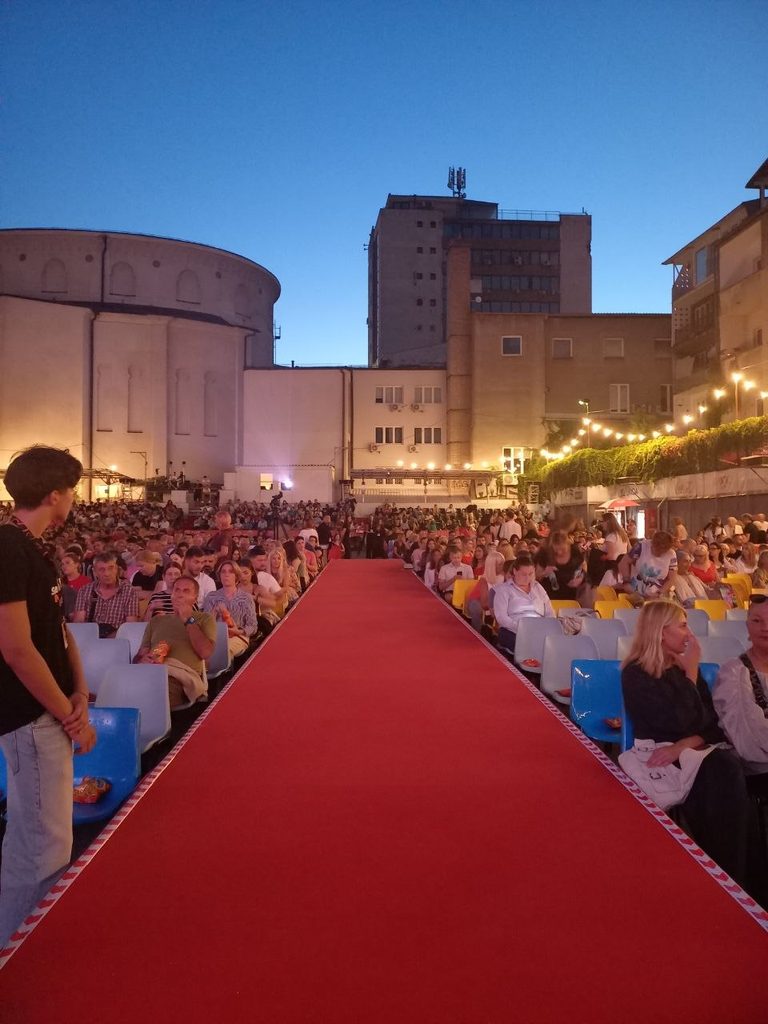
Evening flips the whole thing outdoors. Coca-Cola Open Air Cinema, the festival’s largest venue, hosts the international and European titles. UNIQA Open Air Cinema Stari Grad takes the regional premieres.
What the Program Actually Looks Like
Despite all that variety, SFF has a clear center of gravity: contemporary Southeast European cinema. The main competition makes that obvious right away. Only nine feature films made the 2026 lineup, though the geography stretches wide—Austria, Slovenia, Croatia, Serbia, North Macedonia, Kosovo, Romania, and Georgia. One film picked up a world premiere. Another landed an international premiere. A third opened as a European premiere. The rest arrived as regional premieres. Eight languages on one lineup make subtitling its own quiet craft behind the festival, the kind of translation work most viewers never think about.
The competition refuses to squeeze regional cinema into one style, too. A family drama like “Small Things” sits next to “DUA”, a coming-of-age story, then “Shame and Money” with its social realism, then “Supporting Role”—a near-surreal journey following a former Georgian film star. Women directed six of the nine competition films.
A festival like this also creates a lot of material that continues to live beyond the screenings.
Feature articles and long-form publications can give that material a second life, bringing individual films, filmmakers, and ideas to readers who were never in the audience.
The final awards gave the festival a clear set of landmarks. Sandra Wollner’s “Everytime” took the Heart of Sarajevo for Best Narrative Feature Film, while Ana Urushadze received the award for Best Director for “Supporting Role.” Eva Kostić won Best Actress for “17”, and Adrian Văncică was named Best Actor for “You Don’t Belong Here”. The documentary award went to “To Hold a Mountain” by Biljana Tutorov and Petar Glomazić.
Step outside the competition, and the range only grows. Kinoscope pulled together twelve auteur films from around the world—work with an unusual cinematic language, the kind that rarely finds room in ordinary distribution. Kinoscope Surreal runs alongside it with six genre films, horror and body horror included.
What makes the program worth following isn’t its size. It hands you regional cinema from the inside during one festival week and lets you weigh it against what’s happening in world auteur cinema at the same time.
What Runs Outside the Competition
Outside the competition, SFF opens up considerably. Open Air sits alongside Kinoscope and Kinoscope Surreal. Summer Screen runs next to the special and themed sections—Dealing with the Past, BH Film, European Shorts, and TeenArena. Each strand follows its own logic. One favors new work from established names. Films with international recognition already behind them stand out in that mix. Open Air alone carries eight award-winning titles—Paweł Pawlikowski’s Fatherland, Diego Luna’s Ashes, and Andrey Zvyagintsev’s Minotaur among them. Minotaur returns to audiences here after its Cannes premiere, where it took the Grand Prix, the festival’s second-highest competition award. The top prize—the Palme d’Or—went to Cristian Mungiu’s Fjord.
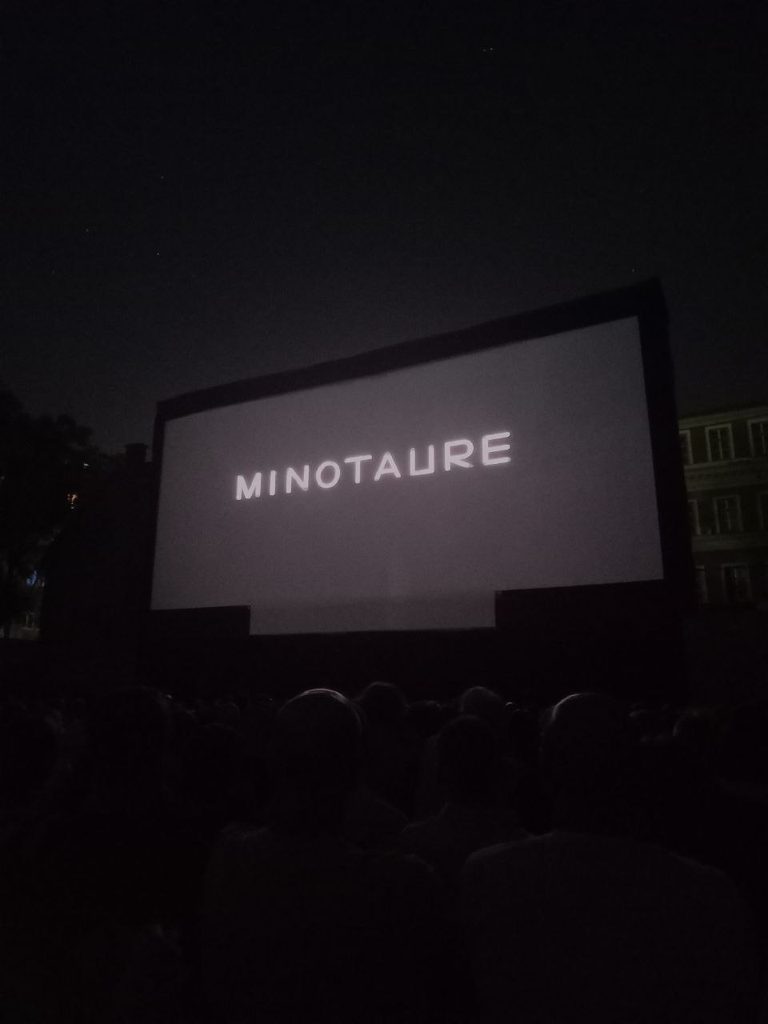
Zvyagintsev sets the story in Russia in 2022, following a successful company executive whose outwardly stable life starts falling apart as personal pressure and the world around him close in at the same time. The festival itself points to something familiar in his work—that shift from a private story toward a wider conversation about power, violence, and time.
Sarajevo screened Minotaur at Coca-Cola Open Air Cinema. Festival director Jovan Marjanović welcomed the audience before the screening, alongside lead actors Dmitry Mazurov and Iris Lebedeva. For both of them, the evening extended the film’s international run past its Cannes premiere and the Grand Prix win.
The City After the Films
Sarajevo looks pretty much the same after a few festival days. Same trams, same climbs, same coffeehouses, same minarets. Tourists still crowd Baščaršija, and everyone else just goes about their business. But something shifts in how you notice that familiar picture—details that used to slip past your attention start standing out.
The cinemas stop feeling like separate dots on a map. They fold into the city itself. Walk through the old town by day, grab a coffee, climb toward whatever landmark catches your eye—then find yourself standing with a few hundred strangers in front of a giant outdoor screen come evening. Nothing marks a hard line between the two.
That’s probably what stays with you longest about the Sarajevo Film Festival. It layers a few extra days onto the city’s normal rhythm without asking Sarajevo to become something else. Film just takes its place next to everything already here—the tram, the mosque, the coffeehouse, the mountains, and an ordinary evening walk.
Photo: Mike Ivan
I came to Sarajevo for the festival and ended up staying a little longer. The films were great, but what I liked most was the atmosphere around them — people talking about movies everywhere, small streets full of visitors, and that feeling that the whole city had turned into one big cinema. This was my first Sarajevo Film Festival, and I definitely want to come back.
Nice report! Really enjoyed reading it.