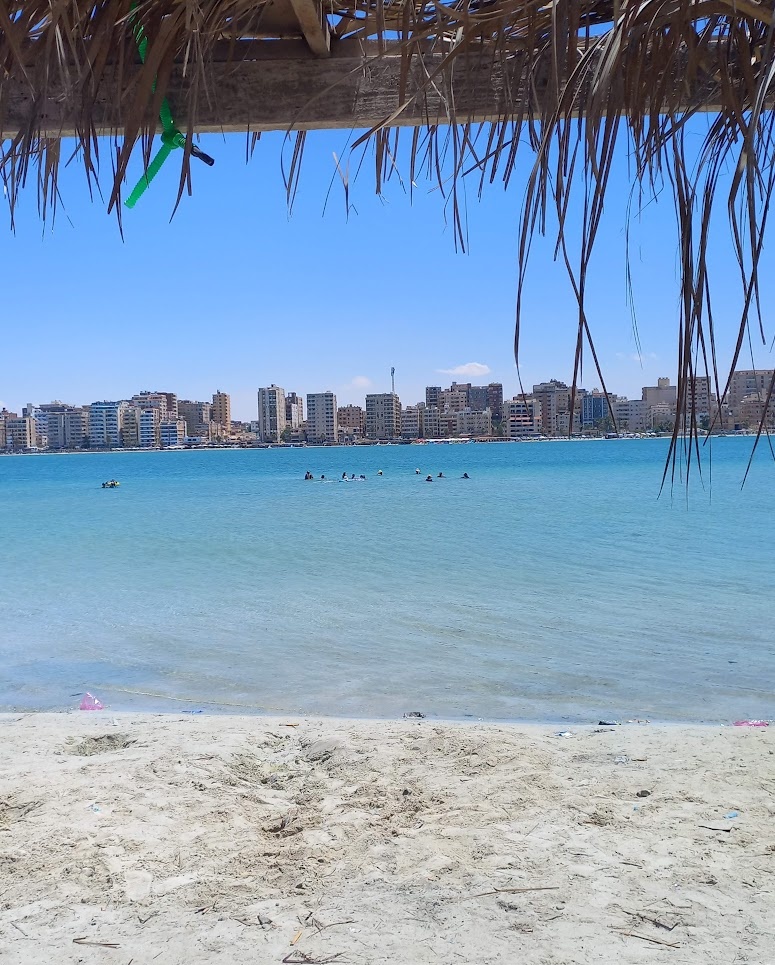
Every summer, the same story unfolds along Egypt’s northern shoreline. Apartments reopen after months of silence. Beach villages come back to life. Long convoys leave Cairo and Alexandria before dawn, while families settle into a routine that will last until autumn. Yet outside Egypt, few travelers realize this coastline plays such a role in the country’s summer life. International tourism still looks toward the Red Sea, leaving North Coast Egypt beyond the spotlight. Why does the Mediterranean coast of Egypt become the center of an Egyptian summer vacation for millions of Egyptians while remaining almost invisible to the rest of the world?
Every road to Al Sahel eventually leads to the same discovery. The coastline looks familiar on a map, yet it follows its own rules once the summer begins. One question leads to another. Why do Egyptians speak about North Coast Egypt as if it were a world of its own? How did seasonal travel reshape the coast? What stands behind the gates of countless beach villages? Why has so much of this coastline escaped the attention of foreign travelers? The answer begins on the road, not in a travel brochure.
Egypt’s Other Coast
Most people looking at a map of Egypt notice the Red Sea first. That is the coastline the world has learned to recognize. Resorts, diving boats, and coral reefs shaped its identity long ago. The country’s Mediterranean shore rarely appears in the same conversation, although millions of Egyptians think about it every summer. Their holidays begin there, not on the Red Sea. That stretch of Egypt’s Mediterranean coast, better known as North Coast Egypt, is where the rest of this story unfolds.
For Egyptians, the name comes first. Few people say “North Coast Egypt” in everyday conversation. They simply say Al Sahel, and everyone understands what follows. Summer houses. Beach villages. Weekends by the sea. Family holidays that return every year. The word resists translation—its literal meaning, “the Coast,” carries none of what an Egyptian hears in it. Al Sahel reflects the way Egyptians speak about the region, while North Coast Egypt places it on the map.
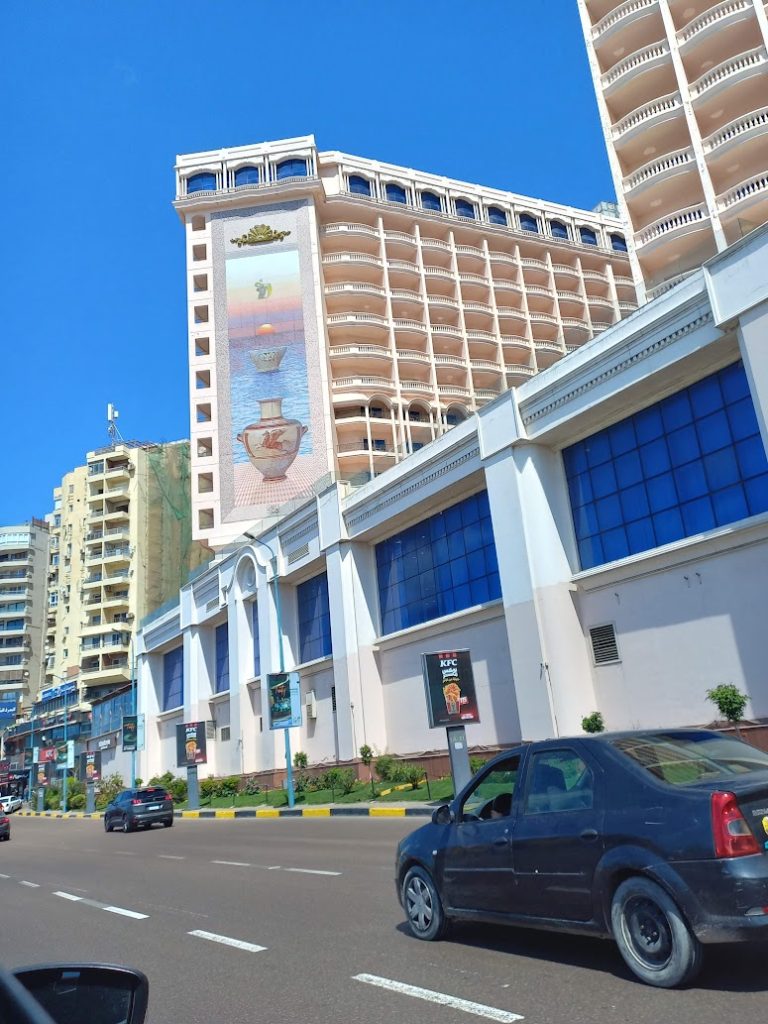
West of Alexandria, the Mediterranean begins to set the pace of the journey. The road stays close to the water, and the names change one after another. New Alamein comes first, growing rapidly along the shoreline. A little farther on, El Alamein marks another familiar point before the highway continues toward Marsa Matrouh. Between them stretches a nearly continuous chain of beach villages, resorts, residential compounds, and public beaches. Almost every major summer destination on Egypt’s northern coast stands beside this single coastal highway. Together they form the coastline that millions of Egyptians return to every summer.
The map explains only part of the story. The seasons explain the rest. For much of the year, North Coast Egypt remains quiet, with many beach villages waiting for their summer residents to return. Then the holiday season begins, and the same coastline changes its rhythm almost overnight. Roads grow busy, apartments fill, beaches come alive, and entire communities return for a few months. Understanding that annual movement is the key to understanding the coast itself.
Why Summer Changes Everything
Every year, the same moment marks the beginning of the season. It arrives not with a change in the weather but with the start of July, when schools close across the country and the long summer holidays in Egypt begin.
Families waiting for this break finally have time to leave the cities for more than a weekend. Cars head north, apartments reopen, and beach villages slowly fill with life again. What remains quiet for most of the year becomes the center of an Egyptian summer vacation, setting the annual rhythm that defines North Coast Egypt until the end of the season.
Cairo supplies the largest share of the summer crowd. Giza, Alexandria, and the cities of the Nile Delta add their own streams to the same northbound flow, and together they turn Egypt’s domestic tourism into a seasonal movement of millions. Families make up the core of this migration. School holidays set the dates, so parents build the whole plan around them. Grandparents frequently move in with the family for those months—three generations under one summer roof remain a normal arrangement here. Most families drive their own cars. July Thursdays on the coastal highway prove it better than any statistics. The car remains part of daily life after arrival. People take it to the fish market in the nearest town, drive over to friends in another village, or spend a day on a public beach twenty kilometers away—nothing ties them to a single resort. Duration separates this migration from an ordinary holiday. Many households spend weeks on the North Coast of Egypt, and some families keep an apartment open from early July until the schools call the children back. A trip north rarely means a quick escape. For a large part of the country, it means relocating summer life itself.
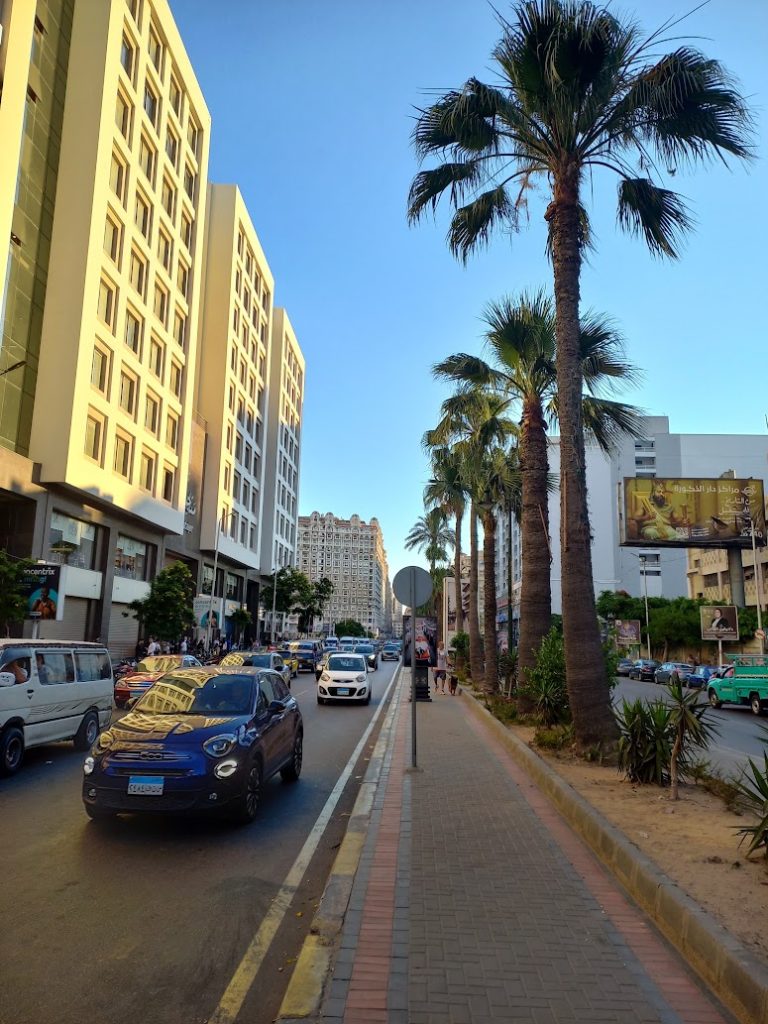
Climate gives the first answer. In Hurghada the real July day ends before noon. After that the heat drives hotel guests back indoors. The Mediterranean shore stays noticeably cooler through the same weeks. Sea breeze does most of that work. Families with small children feel the difference within a day. The Mediterranean coast of Egypt offers more than comfortable weather, though. The coast carries its own atmosphere—open beaches instead of hotel perimeters, neighborhood life instead of animation programs, and a rhythm that resembles a summer town rather than a resort complex. Egyptians recognize this distinction instantly, even when foreign guidebooks miss it. Then there is habit, which runs deeper than any comparison of temperatures. A man who spent his childhood summers near Marsa Matrouh later brings his own children to the same water. A summer on Egypt’s North Coast passes from one generation to the next as a family habit, not as a destination choice. That is why nobody in Cairo discusses the northern coast as a travel discovery. People discuss dates, houses, and neighbors—the way anyone discusses a place they consider their own.
The season transforms the coast physically. Villas open their shutters after months of standing closed. Before the owners show up, cleaning crews go door to door through the apartment blocks. Somebody repaints a terrace railing. Somebody hauls winter dust out of a garden shed. Within two or three weeks thousands of seasonal homes stand ready again. Commerce wakes up next. Cafes and restaurants that spent the winter dark hire staff and roll out their beach furniture. Supermarkets extend their hours. Pharmacies, barbershops, small repair services — everything that a temporary town of families needs — reopens for the same short window. Numbers tell the rest of the story. A village that housed a few dozen caretakers in February holds thousands of residents by mid-July. The same jump repeats along the whole shoreline, village after village. North Coast Egypt carries more summer residents than any other resort area in the country. When an Egyptian family plans an Egypt summer vacation, in most cases the plan starts and ends with this coast.
A Coast Built for Egyptians
Continuous resort construction covers a huge share of the shoreline, and this chain keeps stretching farther toward Marsa Matrouh every year. Hotels play a surprisingly small role in it. The dominant format here is the gated resort village: a private compound of houses and apartments with its own beach, built for owners and long-term summer residents rather than for guests with suitcases. Developers designed most of these projects for the domestic market from the very start. Egyptian families bought the units; Egyptian families fill them every July, and marketing for new phases still targets buyers in Cairo, not tourists abroad.
This explains a strange gap in perception. Foreign visitors who know Egypt through Hurghada or Sharm El Sheikh usually have no idea how far development along Egypt’s North Coast has gone—because nobody ever built it, promoted it, or priced it with them in mind.
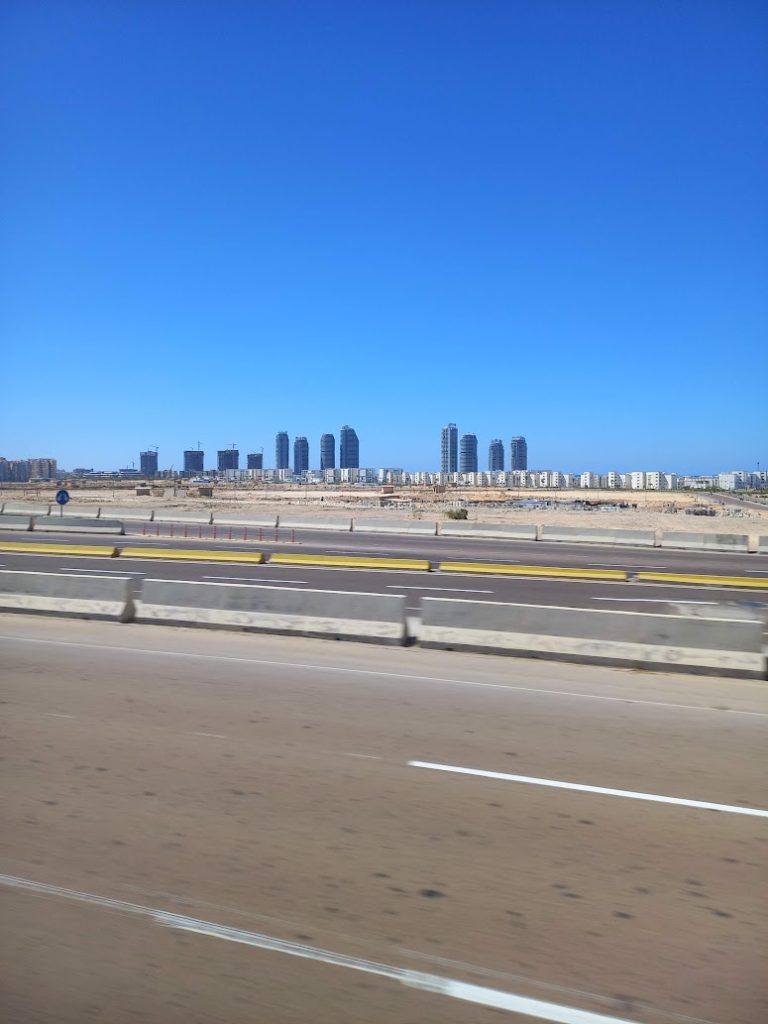
Height limits shape the look of this coast more than anything else. Buildings here rarely climb above three or four floors. A driver passing New Alamein sees its towers as an exception precisely because the rest of the shoreline stays so low. This low-rise coastal development defines the region visually. White and sand-colored walls stretch along the highway for kilometer after kilometer, and none of them block the sky. Villas form the upper tier of the market. Some stand in a row along an internal street; others occupy corner plots with their own gardens. The bulk of the housing stock consists of apartments in small blocks—two floors, sometimes three, with staircases open to the sea wind. Chalets near the beach line complete the range. Each village follows a single master plan. Architects draw the whole compound at once, so streets, house colors, and even fence heights repeat from one block to the next inside the same project. A visitor recognizes the border between two villages instantly because the style changes at the wall. The overall picture has little in common with hotel skylines on the Red Sea. This coast grew as a horizontal one.
Almost every village has a controlled entrance. Entry takes place through a checkpoint with a barrier and security staff. Residents pass through routinely, while visitors are admitted under the community’s access procedures. This system turns each project into a classic gated community, and Egyptians use the English word “compounds” for such places without translating it. Behind the checkpoint, the compound runs its own small world. Pools sit between the housing clusters. Walking lanes connect the blocks with playgrounds and sports courts. A commercial strip holds a supermarket, a couple of cafes, and a pharmacy—enough for daily life without leaving the gates. Most villages also control a private stretch of shoreline. Residents walk to a beach reserved for their compound alone, with its own umbrellas and lifeguards. Some villages include beach furniture in the community fees, while others charge separately for sun loungers, umbrellas, or other facilities, even for residents. Children move around such a village without adult escort—this weighs more for Egyptian parents than any pool or restaurant. A typical family here stays for a few weeks. Nobody wants to spend weeks confined to a conventional hotel, so the market embraced gated communities instead and never looked back.
Construction never really stops here. New project launches happen every season, and billboards along the highway advertise compounds that exist so far only as architectural renderings. Construction sites appear one after another along the highway. Before long, a driver stops trying to count them. Developers move west step by step. Land closer to Alexandria filled up years ago, so companies now open projects in areas that stood empty a decade back. Each new compound extends the same continuous resort strip a few kilometers farther. The state pushes this coastal development from its side. Road upgrades shorten the drive from Cairo. New water and power lines reach sections of the coast that previously offered nothing but sand. Once the infrastructure arrives, private construction follows within a couple of years—the pattern has repeated too many times to call it a coincidence.
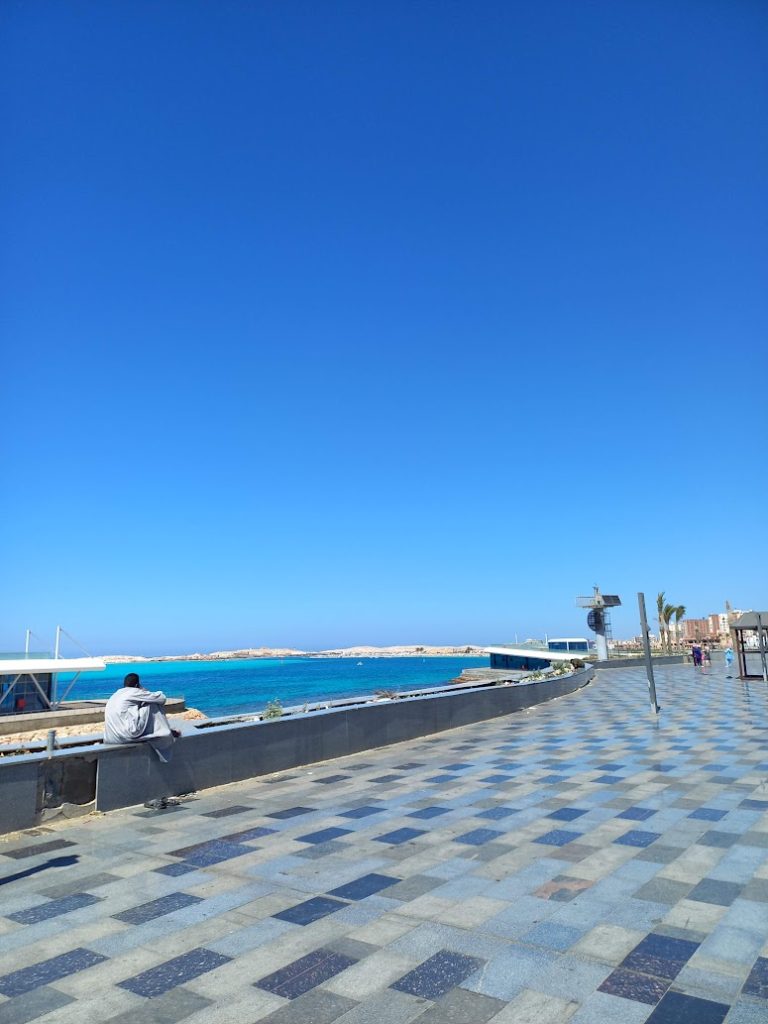
Abstract descriptions explain this coast only up to a point. A concrete example works better. Blue Beach Village near Marsa Matrouh fits the role well—not because the project stands out but for the opposite reason. The compound follows the standard North Coast formula: a checkpoint, low buildings, and beaches at the end of internal roads. Hundreds of villages along the highway repeat the same scheme with minor variations. Whoever understands how one of them lives understands the whole coast. It also answers one of the questions raised earlier. The North Coast was built for Egyptians, not for foreign tourists.
Why Foreign Tourists Rarely See It
Now the paradox comes into full view. North Coast Egypt ranks among the largest resort regions of the country by any measure—length of shoreline, number of housing units, and size of the summer population. Infrastructure here matured long ago. The coast holds thousands of compounds, a modern highway, and its own airports within reach. Yet foreign tourists remain rare guests on these beaches. A European traveler meets crowds of compatriots in Hurghada and almost none of them west of Alexandria. Travel agencies in London or Berlin sell Egypt without mentioning this coast at all. So a reasonable question follows. How does a resort zone of such scale stay practically invisible to the outside world?
The market explains most of it. Housing here works differently in the city and in the villages. Marsa Matrouh offers ordinary year-round apartment buildings, and some of those flats do appear on international platforms — not many, but a traveler can book one. The beach villages run on another model. A typical building looks residential from the outside and works like a small hotel inside: separate apartments, shared staircases, everything built for short summer stays. Yet these places almost never reach the global platforms. A village that hosts thousands of people in July shows a handful of listings online. Whoever fills those apartments does it through local channels—phone numbers on banners, word of mouth, or a caretaker who knows what stands free. Developers built this market deliberately. Their business model rests on selling units to Egyptian buyers, and installment plans stretch payments over eight or ten years. Under this model, the money arrives before a project even opens its gates. Nothing pushes such compounds toward international tourism, because the domestic buyer already carries the entire economy of the coast. The result looks unusual by global standards. A resort region of this scale works almost entirely outside global distribution, and a shoreline of hundreds of kilometers lives without depending on a single foreign booking.
International booking platforms confirm the picture, each in its own way. A search on Booking for the stretch between El Alamein and Marsa Matrouh returns a surprisingly short list — a few hotels, a scattering of apartments, and long gaps where the map shows solid rows of compounds. Airbnb covers the coast slightly better. Even so, those listings represent a tiny fraction of the real housing stock. Agoda shows the thinnest results of the three. Entire villages with thousands of units never appear on any of these platforms. A foreign traveler who plans a trip through the usual apps reaches an honest but false conclusion—that this coast offers almost nowhere to stay. The accommodation exists in quantity. It just lives outside the systems the rest of the world searches. The platforms only mirror a deeper gap: nobody has built search visibility for these places, so the keywords travelers actually type lead them elsewhere. All roads of this explanation lead to the same point. North Coast Egypt grew under the rules of Egypt’s domestic tourism, and those rules never required visibility abroad. Owners fill the compounds without advertising. Word of mouth replaces marketing. Booking platforms capture only the thin edge of the market, so international statistics undercount the region year after year. Foreign observers rank Egyptian resorts by hotel capacity and flight connections — categories in which this coast barely competes — and miss a region that hosts millions every summer. That makes the northern shoreline one of the most underrated destinations in the country for anyone arriving from outside.
Blue Beach Village: A Typical North Coast Community
Blue Beach Village stands on the last strip of land before the sea, some twenty kilometers west of Marsa Matrouh. The coastal highway passes right behind it. The layout repeats the standard formula of the region. Rows of cottages built by Tirana Group, El Etehad Development, and other companies face the water; roads of concrete slabs run from the highway down to the beach—no sidewalks, no curbs, and a gate on the entry road collects fifty pounds per car. Banners on several houses advertise units for sale or for rent. Nothing about the place looks exceptional by local standards. Hundreds of villages along Egypt’s North Coast work the same way, and whoever sees how one of them lives can picture the rest of the coast.
Life inside runs on a rental rhythm. Families arrive, settle into apartments for days or weeks, then leave — and managers prepare the same units for the next arrivals. The village refreshes its population all summer long. Almost everything here serves domestic tourists rather than permanent owners. Deals go through local channels: phone numbers on banners, word of mouth, a caretaker who knows which units stand free. International platforms barely register the place. A search on Booking or Airbnb returns only a handful of listings, and the compounds along the highway between Alexandria and Marsa Matrouh show even fewer — locals say those villages cost serious money and cater to wealthier Egyptians. A few units do surface on Booking and Airbnb, so the village hides from nobody. Yet almost none of these places promote themselves in English—the market simply speaks to its own audience, and the rest of the world stays unaware rather than unwelcome. Evenings reveal the character of the place best. Music plays late from the neighboring terraces, children stay out long after dark, and nobody treats this as a problem. People come here to enjoy themselves, and the mood around the village confirms that they succeed. Nobody goes hungry here either. A cafe works right on the beach, a restaurant stands near the road, and small local shops sell everything from water to charcoal. For a bigger run, residents drive to Marsa Matrouh—supermarkets there carry everything a household needs, and the trip back takes thirty minutes.
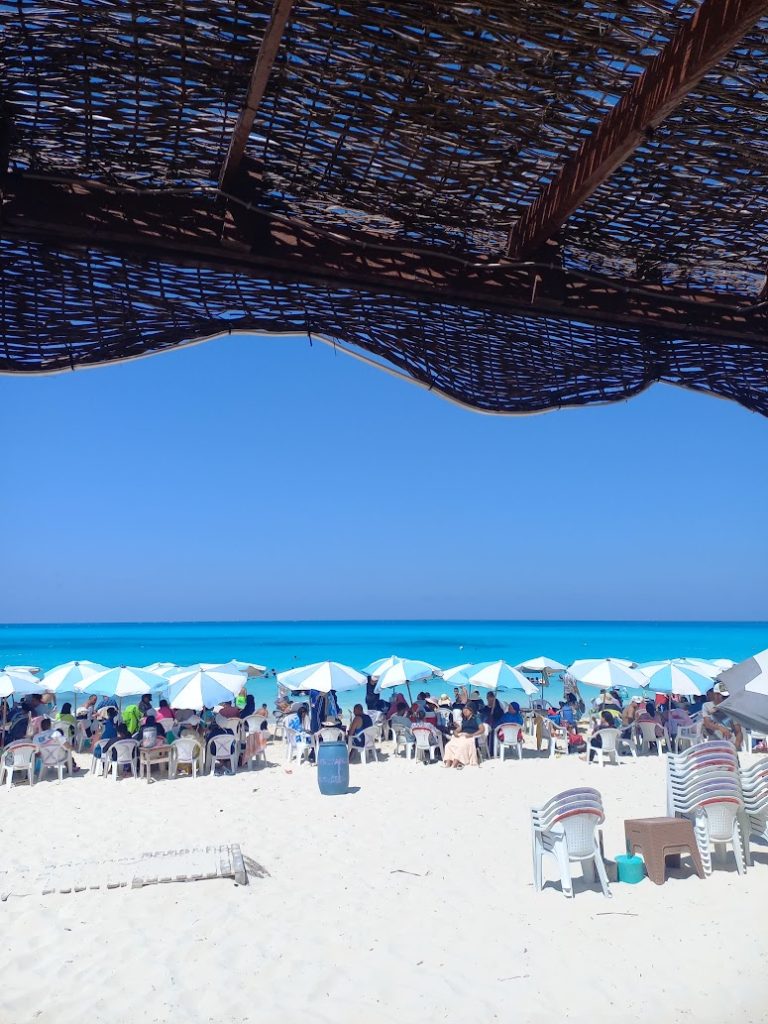
The real magnet of this village lies past the last row of cottages. The sand strip runs wide—even on a packed July weekend, gaps remain between the umbrellas. Water deepens gradually near the shore—the first ten meters or so stay shallow enough for children, and mothers keep their eyes on exactly that strip. Further out, the sea behaves like a sea: waves come and go, modest by Mediterranean standards but real. Locals rank Blue Beach among the best spots on the entire coast, and after a week there the claim stops sounding like patriotism—few Mediterranean beaches in Egypt, or anywhere on the southern shore of the sea for that matter, offer this combination of clean sand, calm water, and room to breathe. One feature of this shore deserves a separate conversation, though: the water itself.
A village like this answers the questions posed at the start better than any statistics. The compound formula works. Domestic demand fills it without a single foreign booking. Local channels move the rentals, local shops feed the residents, and the whole system runs smoothly outside international view. North Coast Egypt repeats this pattern along hundreds of kilometers, from modest villages near Marsa Matrouh to expensive compounds closer to Alexandria. What varies from place to place comes down to price and polish, not to the model itself. And yet the strongest impression of this coast has nothing to do with real estate. It waits at the waterline.
The Color of the Mediterranean: What Makes It Different?
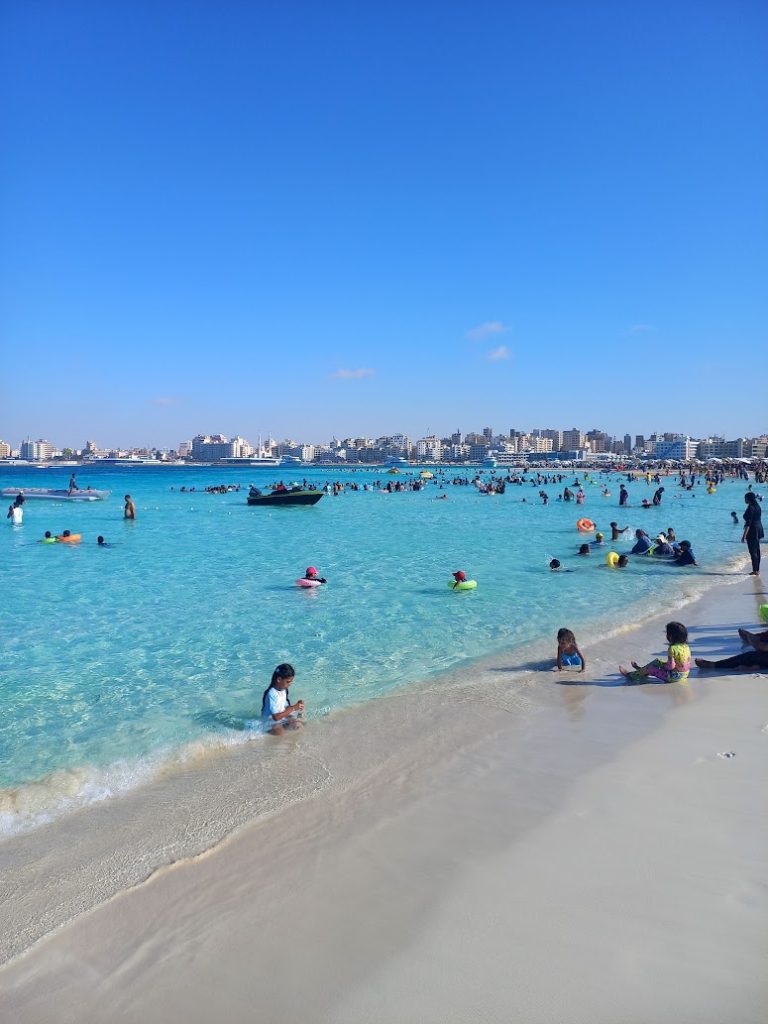
First-time visitors usually stop at the waterline. The color catches them off guard. Most people carry a fixed image of the Mediterranean Sea—deep blue water of the Greek islands or the French coast—and the sea near Marsa Matrouh refuses to match it. Turquoise water covers the shallows—a shade that belongs to tropical latitudes rather than to this part of the map. Friends who receive photographs from these beaches guess the Maldives or sometimes the Caribbean. Nobody names Egypt on the first try. Yet the pictures show ordinary Mediterranean beaches in Egypt on an ordinary July day. Among everything this coast offers, the color of its water remains the detail people remember longest.
The sea changes through the day, and the change follows a schedule. Morning water looks pale, almost silver. The real show starts when the sun climbs high—roughly between one and two in the afternoon, the shallows turn an intense turquoise with a light milky tint, as if someone dissolved a drop of white paint in the water. Clarity adds the second effect.
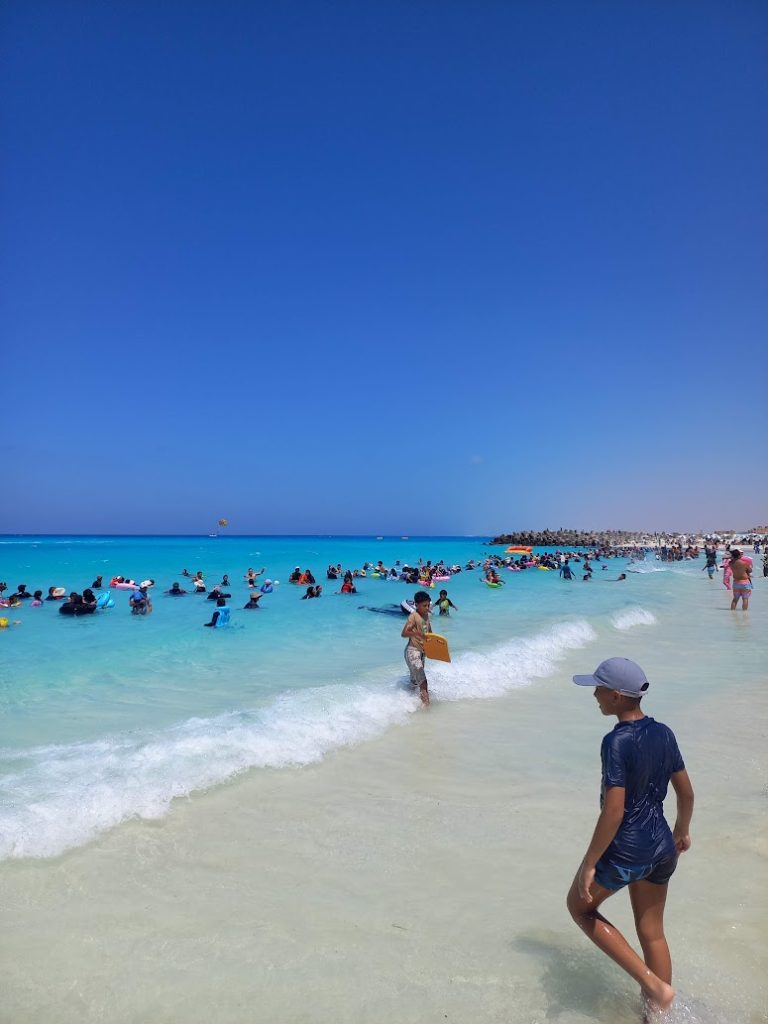
On a windless day the surface works like glass. Stones and shells stay visible at depths where a swimmer no longer reaches the bottom. From the shore the water hides nothing at all. Bluish turquoise with a milky tinge of glass-lined water—and even this hardly conveys it in words to the end. People on this coast check the sea at midday the way people elsewhere check a sunset—they know the exact hour when the Mediterranean coast of Egypt looks its best, and they come to the beach for it deliberately.
Physics stands behind the effect, not magic. The sandy bottom does the main work. Sand here runs pale, almost white. A dark seabed absorbs sunlight; this one throws it back up through the water. Depth matters just as much. The seabed falls away slowly, so a wide band of shallow water stretches along the shore—exactly the zone where reflected light turns the sea turquoise. Deep water reads as dark blue no matter how clean it stays. The July sun completes the picture. At midday it climbs so high that objects on the beach barely cast shadows. Under this vertical light the shallows reach their brightest color of the day. Take away any single ingredient—the white sand, the gentle slope, or the high sun—and the color fades toward the ordinary. This coast happens to hold all three at once.
The photographs accompanying this article come from Blue Beach Village and the beaches around Marsa Matrouh. None of them went through color correction. What looks like a filter on the screen matches what a person sees from the sand, and in one respect the camera still loses: no picture conveys the moment when a cloud passes and the whole bay shifts two shades at once. Images here serve as evidence, not decoration. They document a coast that most outsiders have never considered visiting, which brings the story back to its central question, now from a different angle.
A Coast Still Under Construction
Nothing about this coast looks finished, and the reason lies in Cairo rather than on the shore. Greater Cairo already holds more than twenty million people and keeps adding to that number. A summer place by the sea sits high on the wish list of any family that climbs into the middle class. New compounds sell out at a pace that leaves real estate developers little reason to pause. Competition pushes companies westward along the highway, toward land around Marsa Matrouh that cost little a decade ago. Older compounds respond in their own way—owners renovate, managers add services, and banners offer resales. North Coast Egypt behaves less like a mature resort region and more like a market in the middle of its growth curve, with no obvious ceiling in sight.
The state placed its own bet on this coast, and the bet stands taller than anything private developers built here. New Alamein rises from the shoreline as a planned city of high towers — a deliberate exception to the low-rise coast around it. The government designed it for year-round life, not for a summer season: a university already accepts students, government institutions move offices in, and construction continues in every direction. The message behind the project reads clearly, yet it concerns one city, not the whole shoreline. The hundreds of beach villages along the highway never needed the state: private demand built them, and private demand fills them. New Alamein follows a different logic. There the government builds for millions of future residents, with a university, ministries’ offices, and a planned high-speed rail line—a scale no summer season could ever justify. Whether the towers fill as planned remains an open question, and even skeptics agree on one point: the state intends to keep this city alive twelve months a year.
A traveler on this coast watches two timelines at once. One shows the ready world—beaches, compounds, evening music, and families in the water. The other runs in the background: fresh concrete slabs on a side road, walls of a new compound where last summer stood empty sand, and banners announcing a project with a name nobody heard before. North Coast Egypt never presents itself as a finished product, and this unfinished quality gives the region its particular energy. A visitor returning after two or three years finds a noticeably different coast each time. Few resort regions anywhere change this fast, and the change itself hints at the main conclusion: the northern shoreline means far more to Egypt than a place to swim.
More Than a Beach Destination
Reduce this coast to sand and water, and the picture loses its meaning. North Coast Egypt reflects a shift in how a huge country lives. A private summer home, a family car, weeks of vacation instead of a weekend trip—a generation ago, these things belonged to a narrow circle of Egyptians. Today millions build their year around them. The coast turned that private shift into something visible: Egypt’s domestic tourism created here an entire seasonal civilization, with its own economy, its own habits, and its own geography. Foreign observers who measure Egyptian tourism by international arrivals miss this layer completely. The country built one of its largest resort regions for itself.
The season moves serious money along this coast—more than an outsider would guess from the guidebooks. Every summer the season creates work for thousands of people—caretakers, cleaners, waiters, drivers, lifeguards, and shop staff. For thousands of local families, three months of coastal work shape the budget of the whole year. Trade lives on the same seasonal pulse. A supermarket owner in the region earns his year in three months. Restaurants, pharmacies, taxi drivers, and beach cafes all build their business around the summer wave, and domestic tourism in Egypt delivers that wave with a reliability international tourism never promised. Construction extends the effect beyond the season itself. Building crews work on new compounds in October and February alike, property maintenance never stops, and resale deals close all winter. The coast quiets down after the families leave. Its economy no longer does.
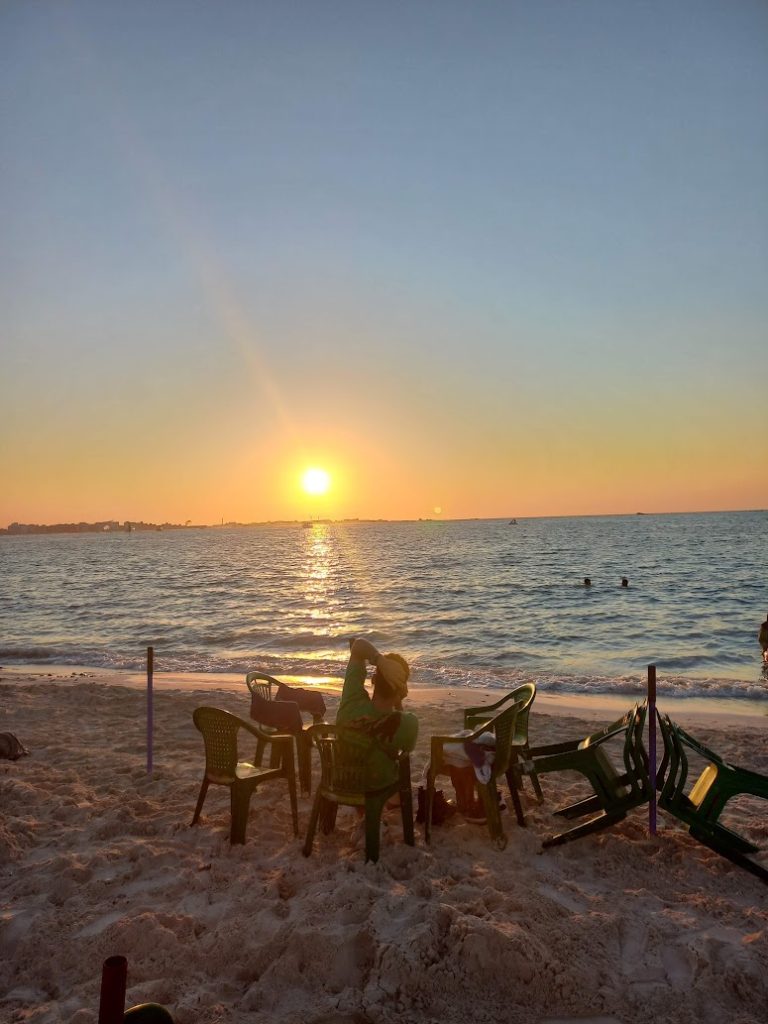
For a foreign traveler, this coast offers something the famous resorts cannot. Hurghada and Sharm El Sheikh present Egypt packaged for export—polished, convenient, and interchangeable with resort zones anywhere on the planet. The Mediterranean coast of Egypt presents the country as it vacations itself. A visitor here watches Egyptian families live their summer: barbecues by the water, football on the sand, music from the terraces, three generations around one table. No tour operator stages any of it. Add the sea itself, and North Coast Egypt starts to look less like a gap in the guidebooks and more like their oversight. The region asks for more effort from an outsider—rentals through local channels; a car (though intercity buses cover the long distances and cheap taxis handle everything around a chosen base); and some patience. It repays that effort with a version of Egypt most tourists never learn exists.
Conclusion
The main question here has a deceptively layered answer. The sea alone never explains a migration of this scale. The full answer assembles itself from everything above. July heat pushes families out of the cities, and the northern shore offers the mildest climate in the country at exactly that moment. Habit does its quiet work—parents bring children to the beaches of their own childhood. Property seals the pattern: a family that owns or regularly rents a place by the water returns to it the way people return home. Around this annual wave, the coast built everything else — compounds, shops, jobs, an entire seasonal way of life. North Coast Egypt grew into all of this as a national resort, by Egyptians and for Egyptians, and that remains its defining trait. None of it hides behind a wall, though: the coast stands open to anyone willing to look past the standard tourist map of Egypt—a map drawn by decades of published content about the same few resorts. The world simply has not yet received an official invitation.
© All photos by Mike Ivan.